Research
Neurological conditions are the leading causes of disability and premature death worldwide. Our research integrates functional materials, flexible bioelectronics, soft robotics, and advanced sensing technologies to develop high-performance, minimally invasive medical devices. We aim to translate these technologies into impactful tools for diagnosing and treating conditions such as epilepsy, brain tumors, Parkinson’s disease, and Alzheimer’s disease.
Minimally Invasive Neural Interfaces
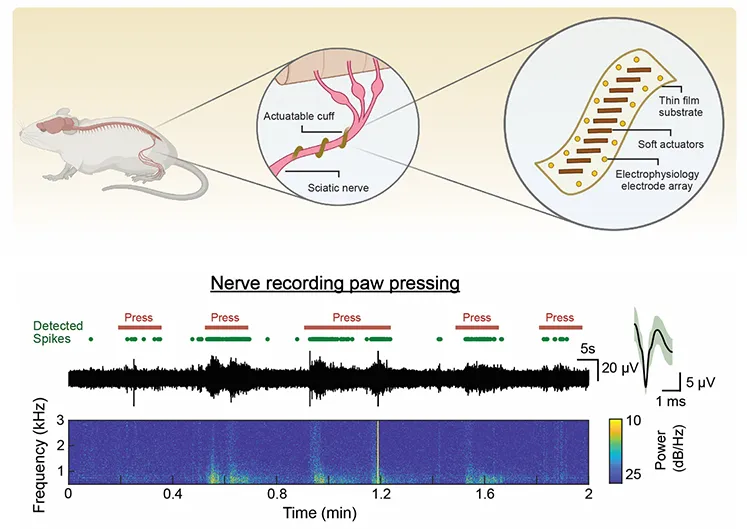
Flexible and even stretchable thin-film bioelectronics hold great promise for advanced neural interfaces. In our lab, we explore new strategies for minimally invasive implantation and high-quality neural recording and stimulation at complex biological interfaces.
References:
Biomedical Soft Actuators and Robotics
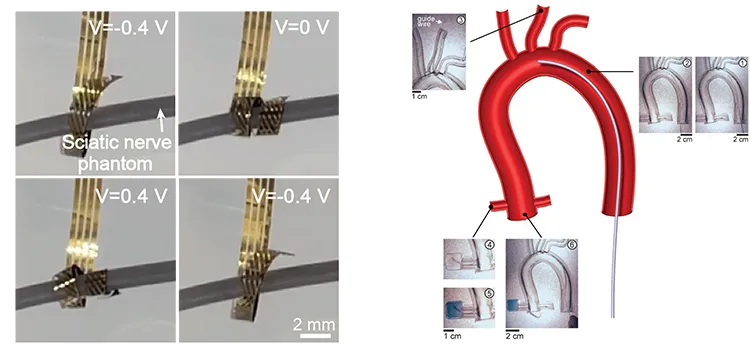
Soft actuators and robotic systems offer unique advantages for interacting with humans and navigating uncertain environments, inspired by the adaptability and dynamics found in nature. We design and engineer biomedical soft robots through innovations in materials and structural architectures. Our goal is to shape the future of medical robotics by developing systems that enhance precision, safety, and effectiveness for patients, clinicians, and surgeons alike.
References:
Soft Functional Materials and Devices
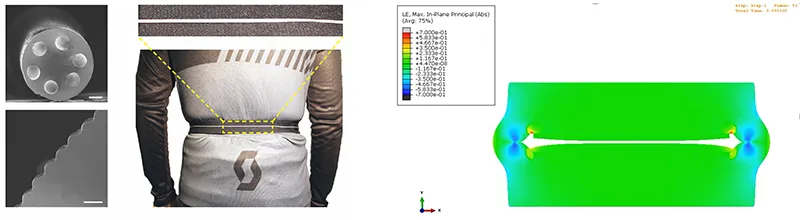
Soft functional materials are essential for next-generation wearable and implantable devices. We work on the fundamental understanding and engineering of soft materials with programmable properties. By tailoring composition, structure, and function at the local level, we aim to create advanced biomaterials and devices that seamlessly integrate with biological systems.
References: